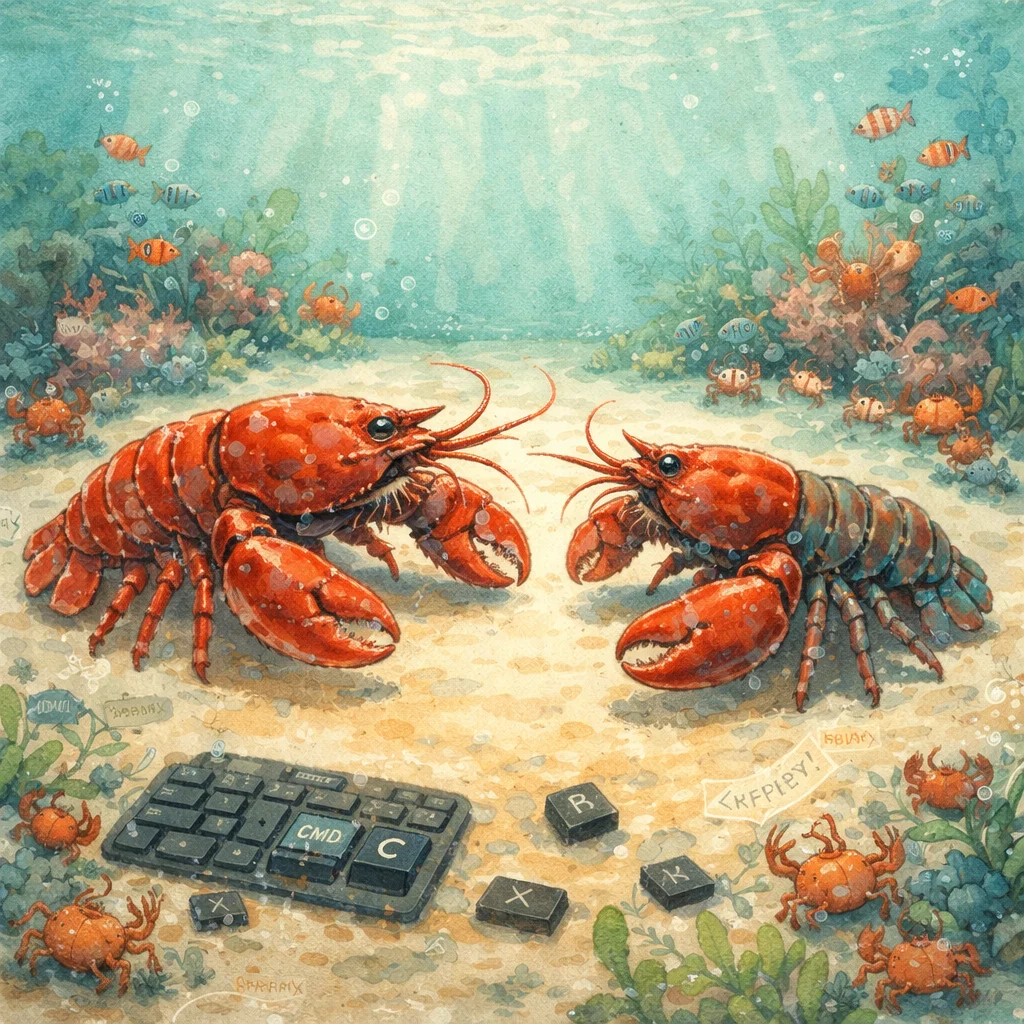
Vibe Coding and the Death of Knowing What You're Doing
Why be a programmer today?
Honestly, half the job is just vibe coding.
You open your editor. You stare at the blinking cursor. And somewhere between your second cup of coffee and your third existential crisis, you whisper to yourself: “God of Cursor, guide my prompts.” Then you paste three lines of ChatGPT output into your codebase and pray the app still runs.
This is not a joke. This is a Tuesday.
There was a time when engineers bragged about algorithms and data structures. You’d walk into a room and someone would casually drop that they implemented a red-black tree from scratch, and the rest of us would nod like we understood what that meant. The flex was knowing things. Deep things. The kind of things that made you mass-email your university transcript to anyone who’d read it.
Now? We brag about prompt engineering.
It’s less “I invented quicksort” and more “I convinced the AI to import React from react.” The bar hasn’t lowered exactly, it just moved sideways into a dimension nobody saw coming.
Here’s the thing nobody talks about: in 2025, juniors and seniors look the same.
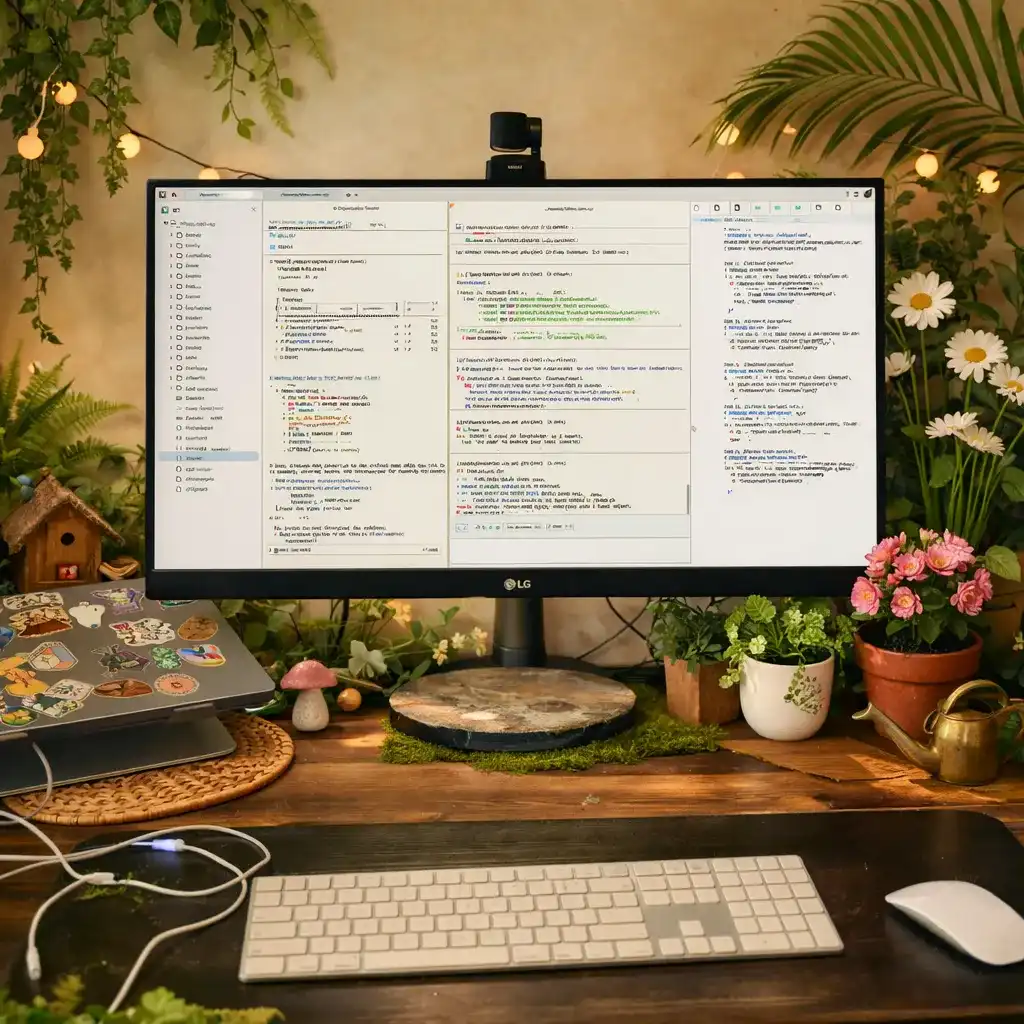
Everyone’s desktop is the same. Half-written code in one tab, a hallucinating language model in the other. The senior has more scar tissue, sure. They know why the AI is wrong faster. But from across the room? You can’t tell who’s driving and who’s being driven.
And vibe coding isn’t even new. We’ve always done this. In the old days we called it trial and error. Now it’s AI-assisted trials. Same chaos, better branding.
The difference is that the feedback loop collapsed. What used to take you forty-five minutes of Stack Overflow archaeology now takes forty-five seconds of “hey can you fix this” in a chat window. The iteration speed went up. The understanding… that’s debatable.
But here’s the twist that keeps me honest.
Vibe coding works. Until it doesn’t.
Because sooner or later, the AI gives you code that compiles perfectly and makes absolutely no sense. You’re staring at it like a detective in a crime drama, except the crime is a recursive function inside your CSS file and there are no witnesses.
Why is this here? Who asked for this? Why does it pass all the tests?
That last one is the scariest. When bad code passes good tests, you start questioning everything. The tests. The code. Your career choices.
Being a programmer in this era is half genius, half gambler. You trust the AI just enough to let it write the first draft. You sprinkle in your own instincts, the stuff you actually learned the hard way, the stuff no model can hallucinate into existence. And then you ship it and hope the vibes align.
Is it real engineering? I don’t know. Maybe not by the textbook definition.
But when the product ships and the tests pass and the users are happy, nobody cares how the spaghetti was cooked. Nobody’s auditing whether the solution came from your brain, from Claude, from Copilot, or from a dream you had at 3am. The artifact is what matters. The outcome. The thing that works.
That’s the uncomfortable truth of vibe coding. It offends the part of us that believes engineering should be rigorous. That you should understand every line. That craftsmanship means hand-rolled everything.
But the world doesn’t reward understanding. It rewards shipping.
I still think fundamentals matter. I still think you should know what a promise does before you await it. I still think the senior who can read the AI’s output and say “no, that’s subtly wrong” is worth ten juniors who can’t.
But I’ve also accepted something: the game changed. The skill now isn’t just writing code. It’s knowing when the vibes are off. It’s the gut feeling that says this compiles but it’s going to break in production at 2am on a Friday. It’s taste. It’s instinct. It’s the human-in-the-loop that knows when to override the machine.
That’s programming in 2025. Write fast, ship faster, and develop the judgment to know when the AI is cooking and when it’s burning the kitchen down.
The vibes are the easy part. The discernment is the career.
Continue Reading
What does the next era of leverage look like?
From Columbus to AI - how leverage has evolved through geography, infrastructure, code, attention, and now intelligen...

My Claude Codes Better than Yours
In AI native workplaces, the tension is no longer who writes better code. It's who extracts better intelligence. When...
The Side Effect of Vibe Coding Nobody Talks About
A subtle shift from AI coding: reading code faster, and why tiny diffs suddenly feel like a slowdown worth unpacking.